 EN
EN

Meta Description
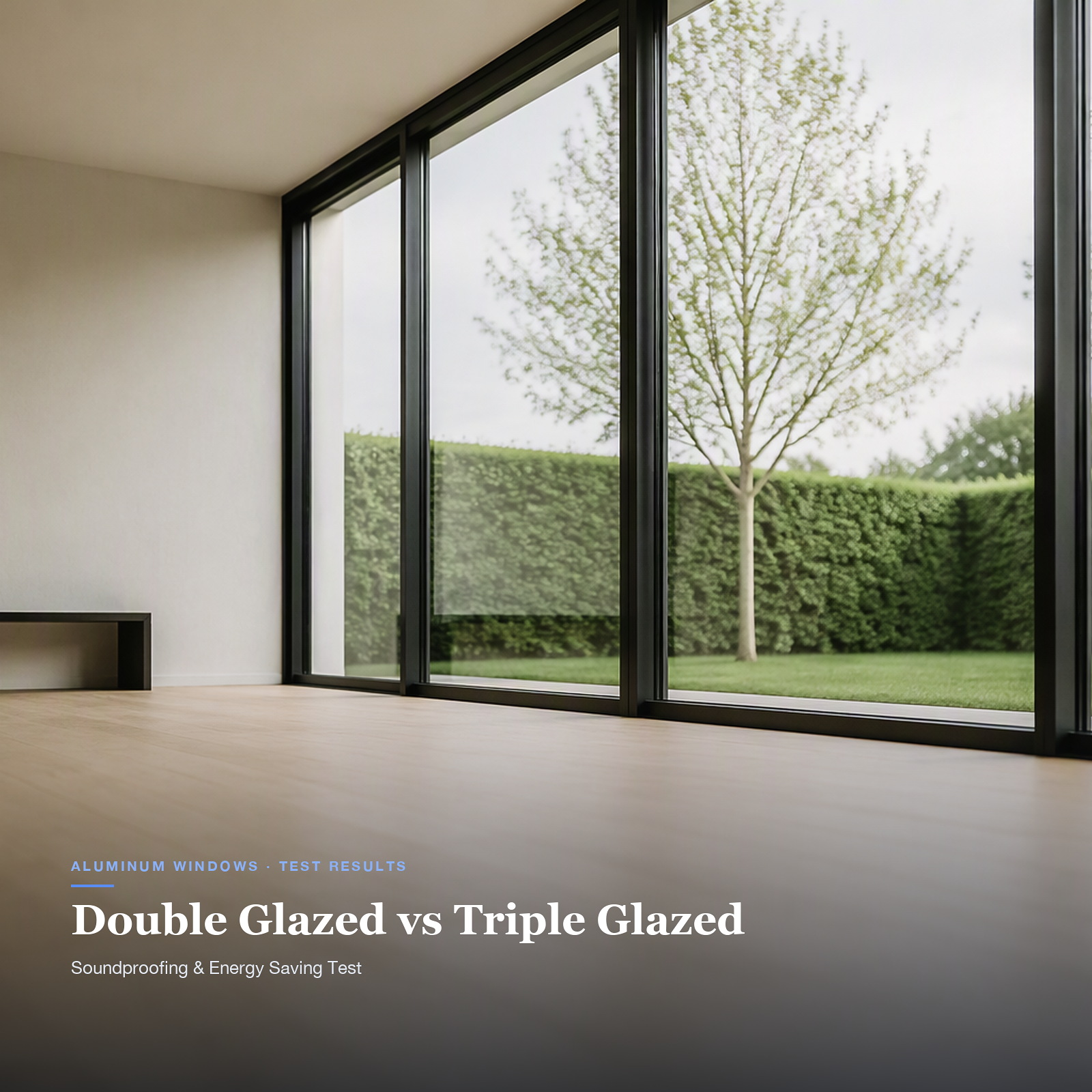
Wondering whether double glazed or triple glazed aluminum windows fit your home? Explore real sound reduction, U-value performance, condensation risks, price gaps and best climate zones. Check our Lotus 1865 inward opening window case with Low-E argon-filled insulated glass.
Blog Title: Double Glazed vs Triple Glazed Aluminum Windows: Soundproofing & Energy Saving Test
Introduction
Homeowners and property renovators shopping for aluminum windows often face a critical decision: double glazing or triple glazing. While modern thermally broken aluminum frames already deliver far better insulation than older aluminum profiles, the glass package determines most of the window’s thermal performance and noise blocking ability.
Many buyers assume triple glazing is always the superior pick. However, triple glazed aluminum windows come with higher upfront costs, extra weight, and specific installation requirements. This article breaks down hands-on test results for sound attenuation, U-values, condensation control and total project cost. We also share a real project example using our Lotus 1865 series double inward opening aluminum window fitted with Low-E argon gas filled insulated glass, to help you decide which glazing option matches your location and living needs.
What Are Double Glazed and Triple Glazed Aluminum Windows?
Double glazing consists of two glass panes sealed together, creating one air or gas-filled cavity between sheets. Triple glazing adds a third glass layer, forming two separate sealed cavities, usually filled with inert argon gas. Both designs can pair with Low-E coatings to reflect infrared heat, cutting heat loss in winter and blocking solar heat gain in summer.
When mounted on thermally broken aluminum frames, these multi-pane systems eliminate the metal frame’s natural heat conduction flaw. Our Lotus 1865 inward-opening aluminum window is built to accommodate both double and triple glazed configurations. The flexible glass setup makes this series popular for urban homes, roadside properties and cold-climate residences.
Energy Performance: U-value Comparison
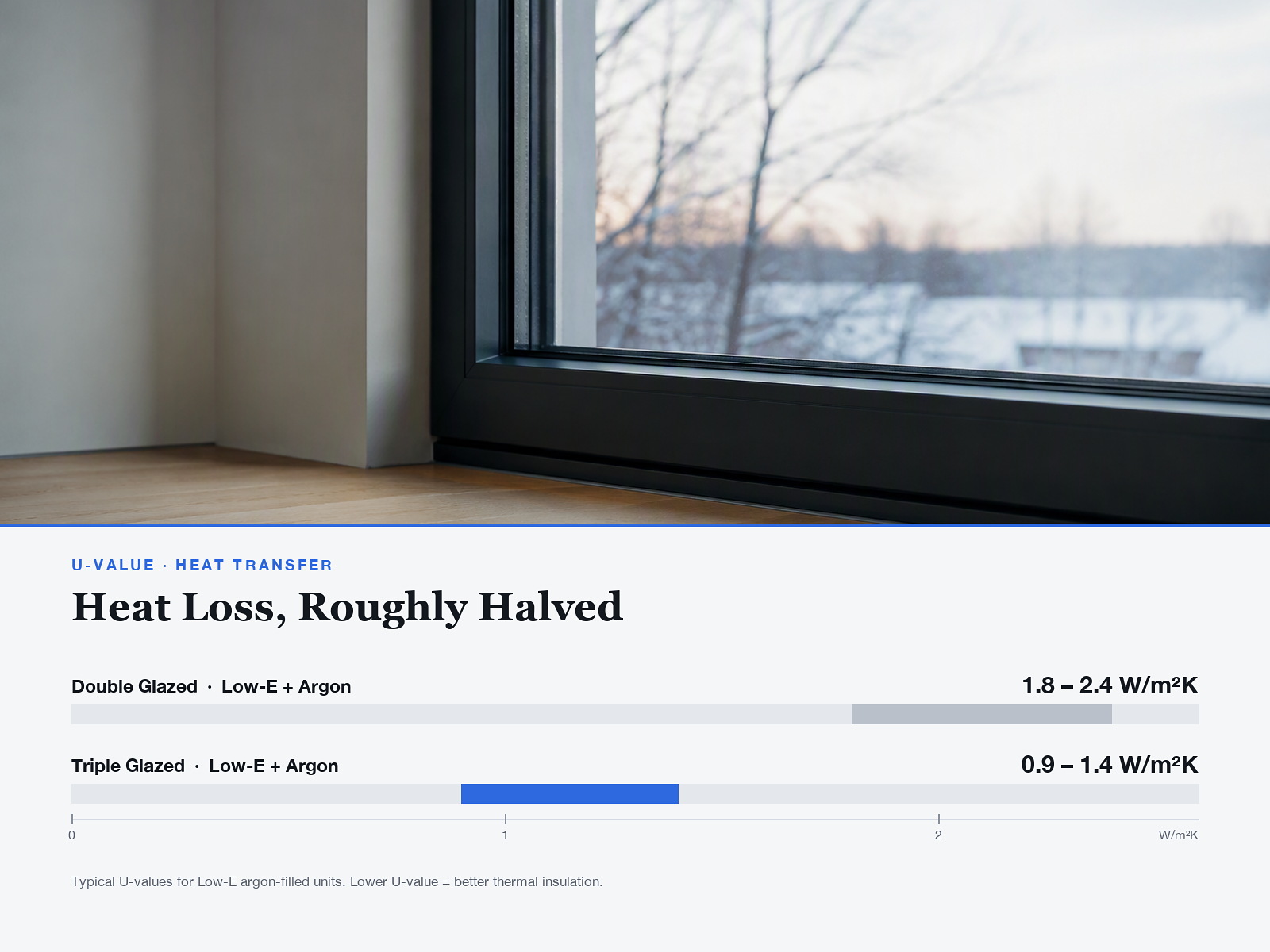
U-value measures heat transfer rate through a window; lower numbers mean better thermal insulation.
- Double glazed aluminum window (Low-E + argon gas): Typical U-value 1.8 – 2.4 W/m²K
- Triple glazed aluminum window (Low-E + argon gas): Typical U-value 0.9 – 1.4 W/m²K
The test data clearly shows triple glazing roughly halves heat transfer compared to standard double glazing. In cold climates, this reduces heating loads significantly, minimizing heat escaping through window surfaces during winter. In mild or temperate zones, double glazing still delivers solid energy savings without over-investment.
Important note: Glazing is only half the equation. A high-performance triple glass unit fitted into a poorly constructed aluminum frame will lose much of its thermal advantage. The Lotus 1865 window uses multi-chamber thermal break strips to complement Low-E argon-filled glass, preserving the rated U-value across the whole window assembly.
Soundproofing Performance: Noise Attenuation Test
Sound reduction is one of the top reasons customers upgrade aluminum windows, especially for homes adjacent to busy roads, railways or city centers.
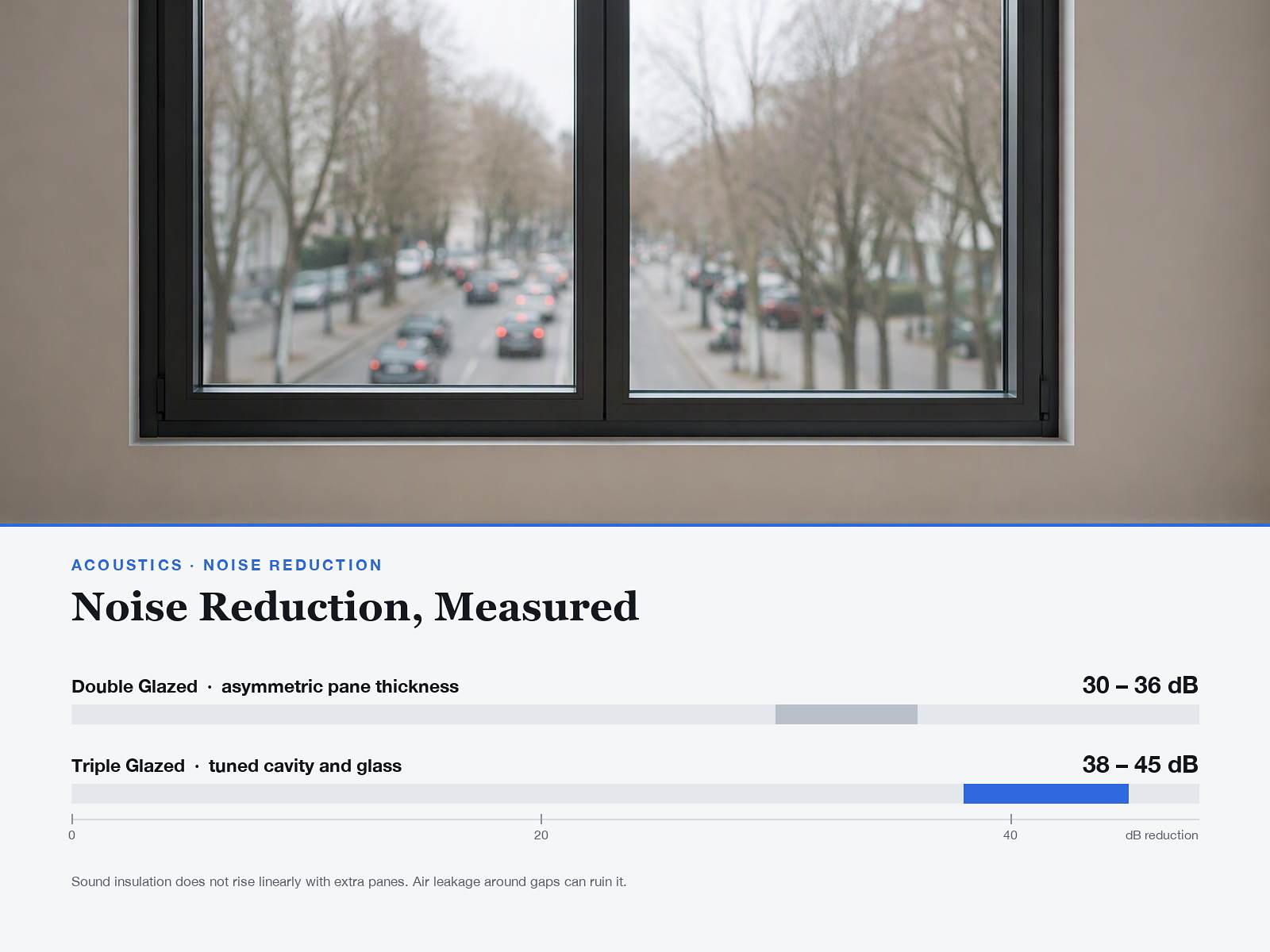
Sound insulation does not increase linearly with extra glass panes. A well-built double glazed aluminum window with asymmetric pane thickness can achieve 30–36 dB noise reduction. Triple glazed aluminum windows can reach 38–45 dB attenuation, with the best results when cavity widths and glass thickness are professionally tuned.
For low to moderate urban background noise, quality double glazing may meet your requirements. If your property sits directly beside heavy traffic, triple glazing provides noticeable quieter indoor environments. Keep in mind: air leakage around window gaps can ruin soundproofing. The Lotus 1865 double inward opening design uses multi-layer sealing gaskets, maximizing acoustic performance for both double and triple glass variants.
Condensation Risk: Which Resists Dew Better?
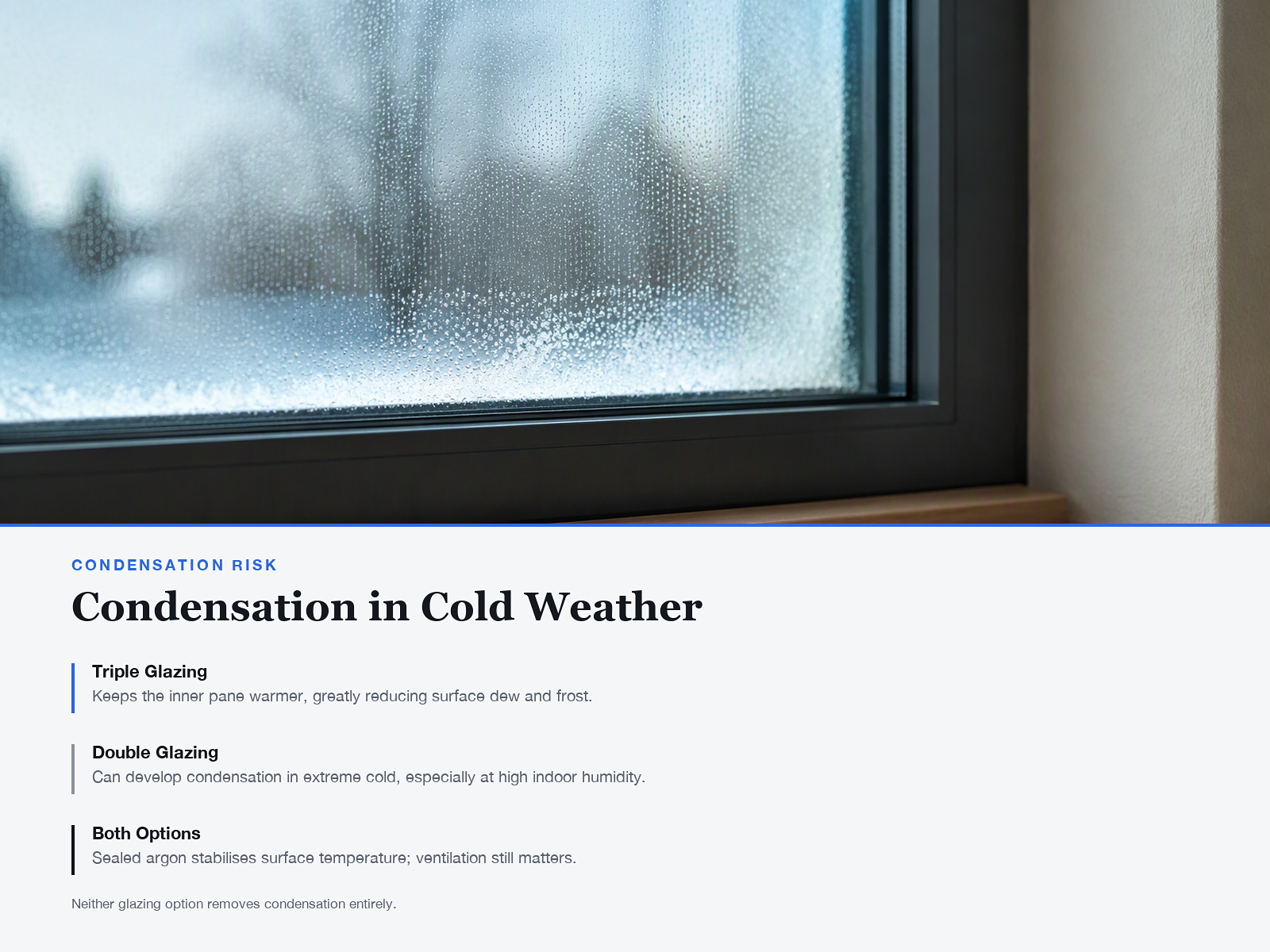
Condensation forms when warm moist indoor air touches a cold glass surface. Better insulated glass keeps the interior pane warmer, lowering condensation chances.
Triple glazed aluminum windows maintain warmer internal glass surfaces, greatly reducing surface dew and frost formation in cold weather. Double glazing can develop condensation in extreme cold, especially if indoor humidity levels are high.
Still, triple glazing cannot eliminate condensation entirely. Proper indoor humidity management and air ventilation remain necessary. Sealed argon gas inside the insulated units further stabilizes surface temperature for both glazing options.
Cost Difference: Upfront & Long-Term Investment
Triple glazed aluminum windows carry a higher price tag. Expect triple glazing units to cost 30% to 60% more than double glazed equivalents, depending on glass size, Low-E coating specification and argon filling.
Additional factors pushing up triple glazing costs include heavier glass weight, which requires reinforced frame hardware and careful handling during installation.
From a long-term perspective:
- Cold climate / roadside homes: Triple glazing brings larger savings on heating bills and ongoing noise reduction benefits, justifying the premium.
- Mild suburban areas: Double glazing offers balanced performance with lower initial spend.
Suitable Application Scenarios
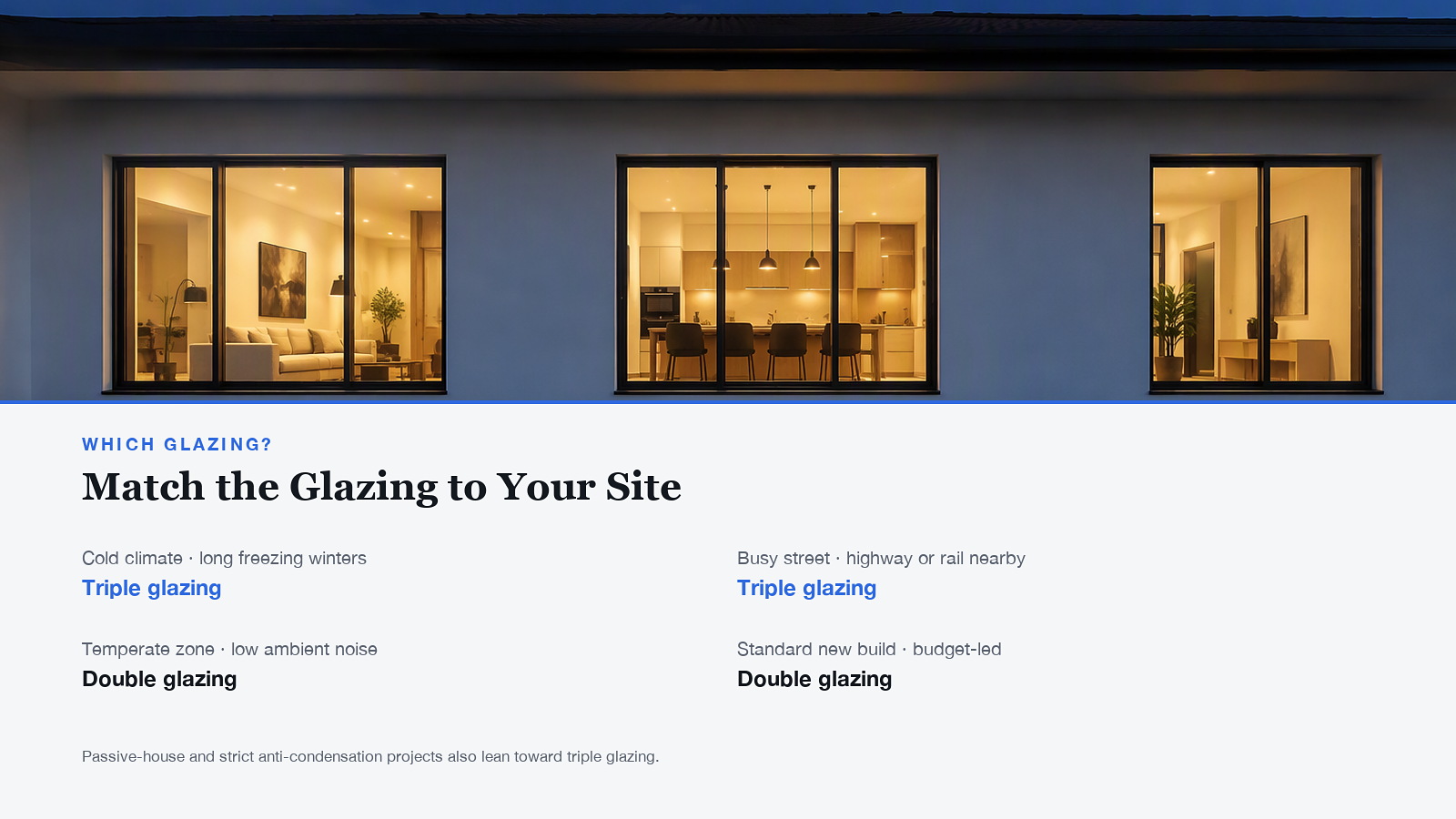
Best for Triple Glazed Aluminum Windows
- Cold climate regions with long freezing winters
- Homes located on busy streets, near highways or railway lines
- Properties needing strict condensation control
- Passive house or high energy-efficiency renovation projects
Best for Double Glazed Aluminum Windows
- Temperate zones with mild winters and summers
- Residential areas with low ambient noise
- Budget-conscious renovation while wanting improved thermal performance
- Most standard new residential builds
Case Study: Lotus 1865 Double Inward Opening Aluminum Window
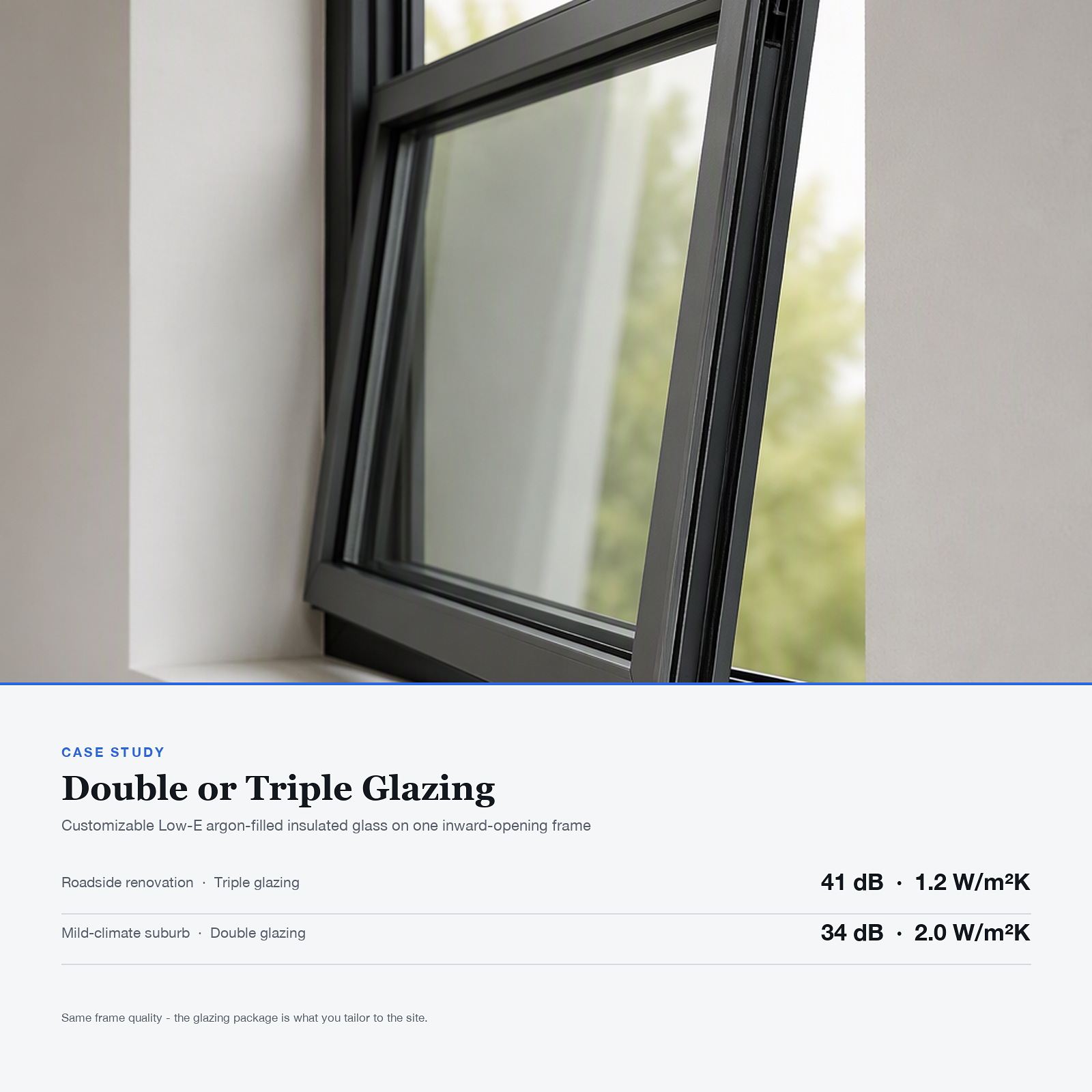
Our Lotus 1865 series double inward opening aluminum window supports customizable glazing, available in both double and triple Low-E argon-filled insulated glass options.
For a roadside residential renovation project, the client selected triple glazing configuration. Post-installation tests recorded sound attenuation of 41 dB, and overall window U-value hit 1.2 W/m²K. Residents reported a dramatic drop in traffic noise and almost no window condensation during winter.
For another suburban project in a mild climate, the customer chose double Low-E argon glazing for the same Lotus 1865 frame. The finished window achieved a U-value of 2.0 W/m²K and 34 dB sound reduction, meeting comfort targets at a much lower budget.
This case demonstrates that the frame quality stays consistent; the glazing package is what you tailor to match site conditions.
Frequently Asked Questions
Q1: Are triple glazed aluminum windows always heavier?
A: Yes. Adding the third glass pane increases unit weight. Window frames and hinges must be engineered to support the extra load, which is why hardware quality matters. The Lotus 1865 series uses heavy-duty hardware ready for triple glass installation.
Q2: Does argon gas make a big difference for energy efficiency?
A: Argon gas has lower thermal conductivity than air. Filling the insulated cavity with argon reduces conductive heat transfer, improving U-value and helping to prevent condensation when paired with Low-E coatings.
Q3: Can I retrofit double glazing to triple glazing on my existing aluminum window frame?
A: Usually not. Most existing frames are not designed for the added weight and thickness of triple glazed units. In most cases, full window replacement is required.
Conclusion
Triple glazed aluminum windows outperform double glazing in thermal insulation, condensation resistance and sound blocking, but they come with a significant cost premium. Double glazing remains a practical, cost-effective choice for many homeowners in quieter, milder locations.
When planning your window upgrade, assess your local climate, surrounding noise level and budget first. The Lotus 1865 double inward opening aluminum window offers flexible glazing choices with Low-E argon-filled glass, allowing you to pick double or triple glazing to match your home’s exact needs.
Whether you prioritize energy savings, quiet living spaces or anti-condensation performance, choosing the correct glazing package will maximize comfort and return on your window investment.
Company store:https://zcsung.en.alibaba.com/
Table of Contents
- Meta Description
- Blog Title: Double Glazed vs Triple Glazed Aluminum Windows: Soundproofing & Energy Saving Test
- Introduction
- What Are Double Glazed and Triple Glazed Aluminum Windows?
- Energy Performance: U-value Comparison
- Soundproofing Performance: Noise Attenuation Test
- Condensation Risk: Which Resists Dew Better?
- Cost Difference: Upfront & Long-Term Investment
- Suitable Application Scenarios
- Case Study: Lotus 1865 Double Inward Opening Aluminum Window
- Frequently Asked Questions
- Conclusion